Buying your first private aircraft is a significant investment that requires careful planning, technical due diligence and a clear understanding of the aviation market.
Whether you are considering a private jet for international business travel, a turboprop for regional connectivity or a helicopter for short-distance transfers, the aircraft acquisition process involves far more than selecting a model and negotiating a price.
For high-net-worth individuals, entrepreneurs, family offices and corporate buyers, aircraft ownership can offer greater flexibility, privacy, productivity and control over travel. The right acquisition depends on how often you fly, where you travel, who travels with you, your operating budget and your long-term ownership objectives.
In this guide, SEACJETS explains how to approach your first private jet or helicopter purchase, from defining your mission profile and choosing the right aircraft to conducting due diligence, negotiating the transaction and preparing for ownership.
What is aircraft acquisition?
Aircraft acquisition is the structured process of identifying, evaluating, purchasing and taking delivery of an aircraft, new or pre-owned, while ensuring that its technical condition, legal ownership, regulatory status and financial structure meet the buyer’s requirements.
A successful acquisition typically brings together several interconnected workstreams:
- Strategic planning: why you need an aircraft and how it will be used.
- Aircraft selection: suitable types, models and individual aircraft.
- Market research: availability, pricing and comparable aircraft.
- Financial planning: purchase price, financing and ongoing ownership costs.
- Technical due diligence: maintenance history, airworthiness, inspections and condition.
- Legal due diligence: ownership, title, liens, registration and contracts.
- Regulatory compliance: aviation, import, export, tax and operating requirements.
- Transaction management: negotiation, specialist coordination and completion.
- Delivery and operations: insurance, crew, maintenance, hangarage and support.
Advisory note. Approach aircraft acquisition as an investment in a transportation capability rather than the purchase of a luxury asset. The aircraft that looks best in a brochure may not be the one that best serves your missions.
Should you buy a private jet or a helicopter?
Private jets and helicopters serve different purposes. Although some missions overlap, their operating environments, capabilities and economics are fundamentally different.
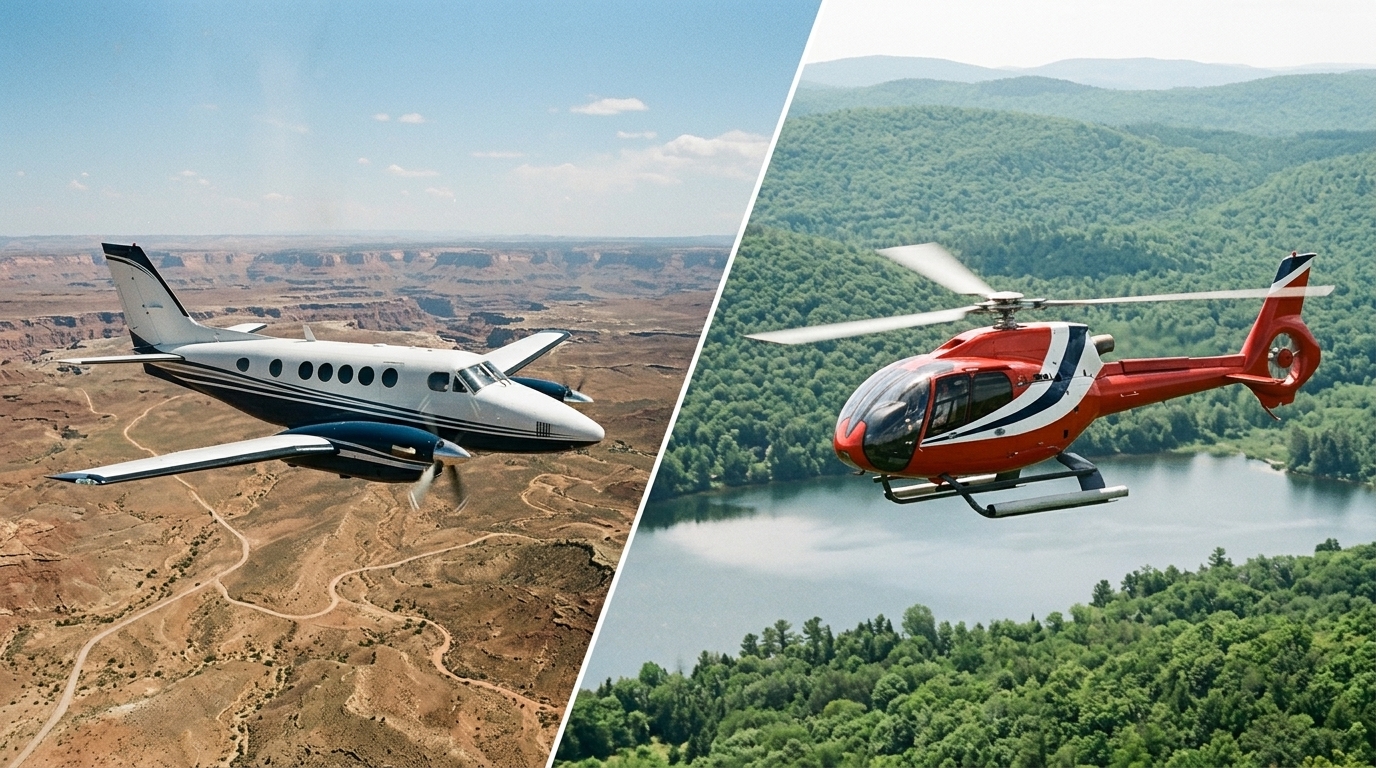
Private jets: regional and international travel
Private jets suit buyers who need efficient regional or international travel, particularly where commercial schedules, connections or airport access are limiting. Depending on the aircraft, they offer access to a broad network of airports, faster point-to-point travel over longer distances, cabins suited to meetings and rest, and flexible departures. A buyer flying regularly between Bangkok, Singapore and Hong Kong has very different requirements from one flying between Europe, the Middle East and Asia, so selection must reflect actual routes, not advertised maximum range.
Helicopters: short-distance mobility and specialised access
Helicopters are valuable for airport-to-city transfers, private estates and resorts, corporate site visits, island and coastal transfers, and specialised missions. Operations remain subject to performance, weather, landing-site suitability, permissions, noise restrictions and local regulations. For some buyers, a helicopter and a jet play complementary roles within a wider aviation strategy.
| Consideration | Private jet | Helicopter |
|---|---|---|
| Primary use | Regional and longer-distance travel | Short-distance travel and specialised access |
| Typical advantage | Speed over longer routes | Flexible landing locations, where authorised |
| Infrastructure | Suitable airports and runways | Approved or legally suitable landing sites |
| Key considerations | Range, runway performance, airport access | Landing permissions, weather, terrain, performance |
| Ownership costs | Aircraft-dependent | Aircraft-dependent, including mission-specific costs |
The best option is determined by your mission profile rather than by aircraft category alone.
Start with your mission profile
A mission profile is a practical description of your anticipated travel patterns and operating requirements. It is the foundation of an informed aircraft acquisition and should be settled before you view a single aircraft.
1. How many hours will you fly each year?
Estimate realistic annual utilisation, distinguishing planned hours from the hours you might fly in an ideal scenario.
2. Which routes will you operate?
List your most frequent journeys, including departure airports, destinations, alternates and seasonal requirements.
3. How many passengers will normally travel?
Separate your typical passenger load from your maximum expected load.
4. What baggage capacity do you need?
Luggage, sports equipment, business materials and specialist equipment all influence selection.
5. Is non-stop travel essential?
Published range is not guaranteed operational range. Passenger load, baggage, reserves, weather, routing, airport elevation and temperature all affect performance.
6. Where will the aircraft be based?
Basing affects maintenance access, crew availability, hangar costs, weather exposure, registration and logistics.
7. What availability do you need?
If your schedule is unpredictable, consider whether ownership, charter, fractional ownership or a hybrid would serve you best.
8. What is your annual operating budget?
Budget for the full ownership structure, not just the acquisition price. The objective is a clear specification against which every candidate aircraft can be assessed consistently.
Choose the right aircraft category
Light jets
Suited to shorter regional routes with modest passenger numbers, often with access to a wide range of regional airports and lower acquisition costs than larger categories. Runway performance, baggage capacity and cabin comfort vary considerably by model.
Midsize and super-midsize jets
Greater cabin space, comfort and range for businesses with regular multi-city travel and families who fly together. Capabilities must be assessed against the intended routes.
Large-cabin and long-range jets
For extended international travel and more sophisticated cabins, with some models offering intercontinental capability. Acquisition price, crew requirements, maintenance exposure and operating costs are substantially higher.
Turboprops
Worth considering where regional airport access, shorter journeys and operating economics matter. For some missions a turboprop is more practical than a jet.
Helicopters
Selection depends on passengers, payload, range, altitude, temperature, landing environment and permissions. A helicopter suited to urban transfers may not suit mountainous terrain or offshore work.
Key principle. Select the aircraft category first, then compare specific models, and finally assess individual aircraft.
Should you buy a new or pre-owned aircraft?
Neither option is automatically superior.
Buying new
Benefits include a configuration tailored to your requirements, a known service history from day one, manufacturer support and warranty provisions, and a wider choice of specification. Disadvantages include higher acquisition cost in many cases, production lead times, depreciation and delivery uncertainty.
Buying pre-owned
Pre-owned aircraft offer broader availability, potentially lower acquisition cost, an established maintenance history to evaluate and access to models no longer in production. Risks include deferred maintenance or upcoming inspections, age-related component exposure, engine programme transfer issues, avionics obsolescence, damage history or incomplete records, and refurbishment needs.
Compare total cost, not asking price. A cheap aircraft can require significant spending shortly after delivery, while a higher-priced aircraft with comprehensive records and a favourable maintenance position may be better value.
Planning your first aircraft acquisition?
SEACJETS guides first-time buyers from mission profile through delivery. Book a confidential, complimentary consultation.
How much does aircraft acquisition cost?
Costs vary substantially by model, age, condition, configuration, market availability and transaction structure, so there is no single price for a private jet or helicopter. Budget across five categories:
A. Purchase price
Influenced by age and total hours, engine hours and cycles, maintenance status, cabin configuration, avionics, damage history, remaining inspection intervals and market supply and demand.
B. Pre-purchase inspection and technical review
Independent inspections, records reviews and specialist advice, scoped to the aircraft and transaction.
C. Transaction and professional fees
Aviation legal counsel, technical advisers, acquisition consultants or brokers, escrow, registration and any financing documentation. Clarify commissions, retainers, exclusivity and conflicts of interest before appointing advisers.
D. Importation and tax
Cross-border deals may involve import duties, VAT or other indirect taxes, registration charges, customs, permits and delivery costs. Registering abroad does not automatically remove tax liabilities.
E. Initial operational setup
Insurance, crew or operator arrangements, training, hangarage, maintenance planning, positioning, subscriptions and any initial servicing or refurbishment, plus a contingency for unexpected findings.
Build a realistic ownership budget
| Cost type | Typical items |
|---|---|
| Fixed annual | Crew, hangarage, insurance, management fees, training, subscriptions |
| Variable | Fuel, utilisation-driven maintenance, landing and handling, navigation, catering, positioning |
| Reserves | Engine and component reserves, capital and maintenance provisions |
| Annual ownership cost | Fixed + variable + reserves + other operating expenses |
Dividing total annual cost by occupied flight hours gives a simple cost per occupied hour. Base the decision on a multi-year model covering utilisation, financing, depreciation assumptions, exit costs and potential resale value, remembering that these are estimates, not guarantees.
Ownership vs charter, fractional and leasing
Ownership suits frequent users who want control, predictable access and a particular configuration, but it is not always the most economical or practical solution.
Private charter
Suited to infrequent or variable flying, with no acquisition expenditure, access to different aircraft types and no ownership administration. Consider availability, positioning costs, operator selection and pricing variability, and use appropriately authorised operators.
Fractional ownership
An interest in an aircraft or fleet with managed services. Examine usage rights, fees, exit provisions, availability guarantees and the legal nature of the interest.
Leasing
Access without buying outright, with structures that vary widely. Assess lease obligations, maintenance responsibilities, insurance, return conditions and termination rights.
The hybrid model
Many buyers own an aircraft for core routes and charter for occasional trips that need a different category, for example a smaller jet for regional travel plus chartered long-range aircraft for long-haul.
Aircraft acquisition: a step-by-step buying process
Step 1: Define the acquisition mandate
Document your mission profile, aircraft category, budget, timeline, passenger and cabin requirements, home base, ownership structure, intended registry and operational needs.
Step 2: Appoint your acquisition team
This may include an acquisition specialist, independent technical consultants, aviation counsel, tax advisers, financing specialists, a management company or operator, and insurance advisers. Technical inspectors and legal advisers should ideally be independent of the seller, and you should know how each adviser is paid.
Step 3: Conduct market research
Review comparable listings, reliable transaction evidence, availability, asking versus achievable prices, location, maintenance status and specification. Prioritise suitability and risk over the number of options.
Step 4: Review aircraft records
Registration and ownership records, airworthiness documents, maintenance, engine and APU logs, component histories, modifications and repairs, airworthiness directive and service bulletin status, damage history, weight and balance, equipment lists, engine programme agreements and maintenance forecasts. Missing records can affect value, compliance, insurability and resale.
Step 5: Submit an offer and negotiate terms
A letter of intent sets out price, deposit, exclusivity, inspection rights, acceptance criteria, delivery, title transfer, escrow, risk of loss, closing conditions and remedies. Have aviation counsel review it before signing or transferring funds.
Step 6: Conduct a pre-purchase inspection
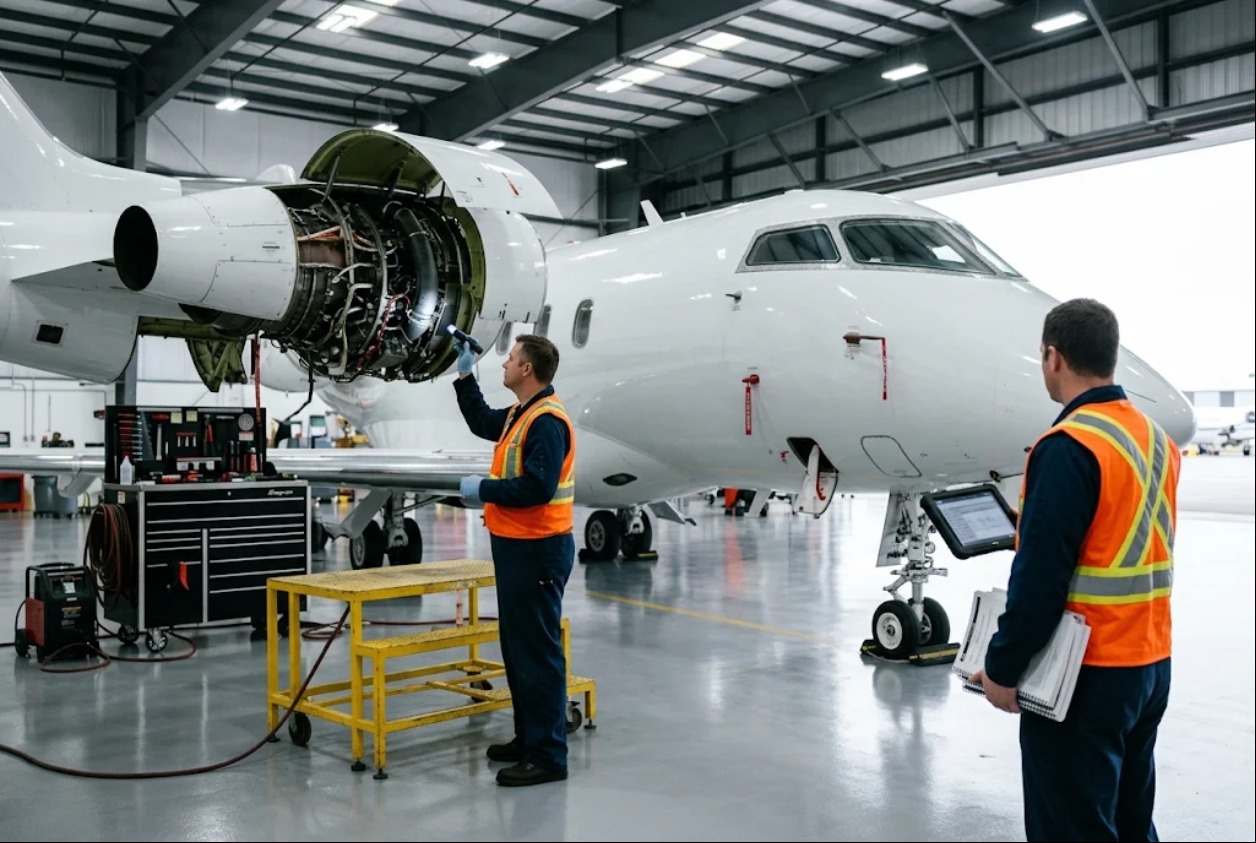
The PPI is one of the most important stages. It may cover physical inspection, records, engines, avionics, systems, structure, corrosion, cabin condition and upcoming maintenance. Agree the scope, facility, access and acceptance criteria in advance, and which findings the seller must rectify, which justify a price adjustment and which allow termination.
Step 7: Verify title and legal status
Confirm the seller’s authority, registered and beneficial ownership, mortgages, liens, registration status, International Registry interests where applicable, deregistration and export requirements, and corporate approvals, including the Cape Town Convention framework where relevant.
Step 8: Complete regulatory and tax checks
A buyer acquiring an aircraft for use in Thailand, for example, should not assume it can simply be imported, registered and operated. Analyse customs, taxes, registration eligibility, airworthiness, ownership and control rules, operational approvals, commercial-use restrictions and cabotage.
Step 9: Arrange financing, insurance and closing
Confirm lender conditions and timing, and insure for value, use, territories, crew, liability limits, hull cover, deductibles and exclusions. Closing coordinates documents, funds, title transfer, delivery and registration steps through qualified professionals.
Step 10: Take delivery and prepare for operations
Complete registration, airworthiness documentation, insurance, crew appointments, training, maintenance and management agreements, hangarage, manuals and flight-planning processes. Do not operate until every regulatory and operational requirement is satisfied.
Want an expert to run your acquisition?
SEACJETS coordinates sourcing, due diligence and negotiation for buyers across Asia-Pacific. Book a confidential consultation.
Aircraft due diligence: what buyers must never overlook
Maintenance status and future expenditure
Identify upcoming major inspections and component events, and request a forecast for at least the next 12–36 months that separates scheduled work, condition-driven work and uncertain exposure.
Engine condition
Engines are a major share of value and future cost. Assess hours and cycles, life limits, programme participation and transferability, inspection findings, trend monitoring, shop visit history and forecast overhaul costs.
Damage history
Prior damage is not automatically disqualifying, but repairs must be documented and assessed for airworthiness, insurance and resale implications.
Avionics and equipment
Check navigation, communication and surveillance capability, regulatory mandates, upgrade needs, subscriptions and parts availability.
Cabin and passenger experience
Evaluate seating, noise, connectivity, baggage, lavatory and refurbishment needs, and confirm cabin modifications are properly approved.
Resale liquidity
Aircraft are not guaranteed to appreciate. Model popularity, production status, records, engine programme, specification and market conditions all influence exit value, so plan your exit before you buy.
Registration, tax and cross-border considerations
Registration, legal ownership, tax residence and operational control are separate questions and should not be treated as interchangeable.
Choosing a registry
Consider owner eligibility, nationality and corporate structure, aircraft type, intended use, operating location, financing, maintenance infrastructure, insurance and regulatory obligations. Choose on legal and operational suitability, not perceived tax advantages alone.
Aircraft acquisition in Thailand and South-East Asia
Buyers basing or operating aircraft in the region should review local registration, import and customs procedures, tax treatment, ownership eligibility, operating permissions, airport and hangar availability, maintenance support, crew availability and cross-border charter restrictions. Private and commercial operations may be subject to different rules.
Ownership structures
Ownership may sit with an individual, company, trust or other recognised structure. It should have genuine commercial and legal substance, and professional legal and tax advice is essential.
Aircraft management: what happens after you buy?
Many first-time owners appoint an aircraft management company or an authorised operator. Services may include crew recruitment, maintenance coordination, insurance administration, scheduling, regulatory support, budgeting and reporting, hangarage and supplier management.
Before appointing a manager, clarify fees and additional charges, crew employment, maintenance approvals, reporting, operational control, insurance, service standards, termination rights and availability expectations.
Can you charter your aircraft when you are not using it?
Some owners use commercial charter to offset costs, but revenue should never be assumed. It depends on demand, aircraft type, location, seasonality, competition, positioning costs and regulatory eligibility, and commercial use adds requirements, wear and scheduling trade-offs. Model any revenue conservatively.
Common aircraft acquisition mistakes
- Buying for prestige rather than utility. Start with mission requirements.
- Focusing only on purchase price. Deferred maintenance, insurance, crew and operating costs change the economics.
- Relying only on seller information. Independent verification is essential.
- Limiting the pre-purchase inspection. A narrow scope leaves risks undiscovered.
- Ignoring upcoming maintenance. An attractive deal can be followed by heavy expenditure.
- Choosing an ownership structure too early. Structure should follow your requirements.
- Assuming the aircraft can operate anywhere. Airports, permissions, traffic rights and performance limit flexibility.
- Overestimating charter revenue. Commercial utilisation is uncertain.
- Underestimating management complexity. Crew, maintenance, insurance and compliance need sustained oversight.
- Failing to plan the exit. Consider marketability and transaction costs before buying.
How long does aircraft acquisition take?
There is no universal timeline. A well-documented aircraft in a straightforward deal can move considerably faster than a complex international acquisition. Common sources of delay include aircraft availability, seller documentation, inspection scheduling, maintenance findings, title or lien issues, financing approval, import procedures, tax analysis, registration and export documentation, and delivery logistics.
Establish a transaction schedule with milestones and contingency periods, and make sure the purchase agreement addresses delivery deadlines and the consequences of delay.
Is aircraft acquisition a good investment?
For most private buyers, ownership is best evaluated as a strategic transportation decision rather than a conventional financial investment. An aircraft can create real value through less travel friction, schedule flexibility, access to poorly served locations, productivity, privacy and family convenience.
Those benefits must be weighed against acquisition and operating costs, depreciation, maintenance exposure and the opportunity cost of capital. Resale values are uncertain, so ownership should not be justified by expected appreciation or charter income alone. The right benchmark is often the cost of chartering comparable journeys over the same period.
Why work with an aircraft acquisition adviser?
Acquisition combines technical, financial, legal and operational considerations. For a first-time buyer, coordinating these alone can be time-consuming and expose the deal to avoidable risk. An experienced adviser can help:
- Develop the acquisition brief.
- Identify, screen and compare aircraft.
- Review pricing and market positioning.
- Coordinate technical inspections and specialists.
- Support negotiations and manage transaction milestones.
- Plan delivery and entry into service.
Establish the adviser’s scope of work, compensation, independence and any seller-side relationships. No adviser can eliminate every risk or guarantee a price or outcome; the goal is a well-informed decision supported by the right expertise.
Your first aircraft acquisition: a practical checklist
- Mission profile and annual utilisation established.
- Aircraft category and specification defined.
- Ownership versus charter evaluated.
- Total acquisition and ownership budget approved.
- Acquisition team appointed and aircraft shortlist prepared.
- Records reviewed and preliminary technical assessment completed.
- Offer and transaction terms reviewed by counsel.
- Pre-purchase inspection scope agreed.
- Title and legal due diligence completed.
- Financing, tax, import and registration requirements confirmed.
- Insurance, management and maintenance arrangements in place.
- Closing, delivery and operational readiness verified.
SEACJETS advisory scope, availability and engagement terms are subject to confirmation. Aircraft transactions are subject to independent due diligence, applicable regulations and definitive contractual documentation.
Frequently asked questions
What is aircraft acquisition?
Aircraft acquisition is the process of purchasing an aircraft, including selection, market research, technical and legal due diligence, financial planning, negotiation, completion and delivery. A professional process evaluates suitability, condition, ownership status, regulatory compliance and total cost of ownership.
How much does it cost to buy your first private jet?
It depends on the model, age, condition, configuration and market availability. Pre-owned aircraft can cost less than comparable new ones, but maintenance exposure and operating costs can change the total substantially, so prepare a complete ownership budget before making an offer.
Is it better to buy a private jet or a helicopter?
A private jet generally suits longer regional and international journeys, while a helicopter suits short-distance travel, remote access and specialised missions. The decision depends on routes, passengers, operating conditions, landing permissions and budget, and some buyers benefit from both.
Should I buy a new or pre-owned aircraft?
New aircraft offer a tailored specification and fresh service history; pre-owned aircraft offer broader availability and a potentially lower price. The right choice depends on budget, delivery timing, condition, specification and maintenance requirements.
How many flight hours a year justify owning an aircraft?
There is no universal threshold. The comparison depends on aircraft type, charter rates, fixed costs, utilisation, positioning, financing, management fees and required availability, so build a tailored model using your actual travel patterns.
What is a pre-purchase inspection (PPI)?
An agreed technical and records assessment carried out before completion, covering physical condition, maintenance history, engines, avionics, structure and anticipated maintenance. It identifies issues that may affect acceptance, pricing or the decision to proceed.
How long does aircraft acquisition take?
It varies with the aircraft and transaction complexity. Availability, inspections, financing, documentation, registration, importation and approvals all affect completion, and international transactions need extra coordination.
Can I finance my first private jet?
Often, yes, subject to lender requirements, aircraft eligibility, your financial standing, security arrangements and jurisdiction. Compare financing costs, covenants, collateral requirements and any restrictions on aircraft use.
What is the difference between aircraft acquisition and leasing?
Acquisition generally means purchasing the aircraft and obtaining ownership; leasing gives contractual access without necessarily transferring ownership. The financial, legal, operational and tax implications differ.
Can I register my private jet in another country?
Potentially, depending on the aircraft, owner eligibility, corporate structure and registry rules. Registering abroad does not automatically remove domestic tax, import, operational or regulatory obligations, so take legal and tax advice first.
Can I earn income by chartering my aircraft?
Potentially, where the aircraft, operator and operation meet all requirements, but charter income is uncertain. Avoid relying on speculative charter revenue to justify an acquisition.
What documents should I check before buying an aircraft?
Ownership and registration records, maintenance logs, airworthiness documentation, engine and component records, inspection reports, damage history, modification approvals, equipment lists and programme agreements, reviewed independently by technical and legal advisers.
What are the biggest risks when buying a pre-owned aircraft?
Incomplete records, undisclosed damage, upcoming major maintenance, engine exposure, title issues, regulatory non-compliance, unexpected refurbishment costs and weaker-than-expected resale demand.
Is aircraft acquisition suitable for family offices and corporate buyers?
It can be, for organisations with recurring travel, time-sensitive operations or specific mobility needs, taking governance, utilisation, operating costs, ownership, tax and succession planning into account.
How do I start the aircraft acquisition process?
Define your mission profile, utilisation, passengers, preferred category and budget, then get professional guidance to build an acquisition brief and coordinate due diligence. SEACJETS can help you explore your requirements in a confidential, complimentary consultation.