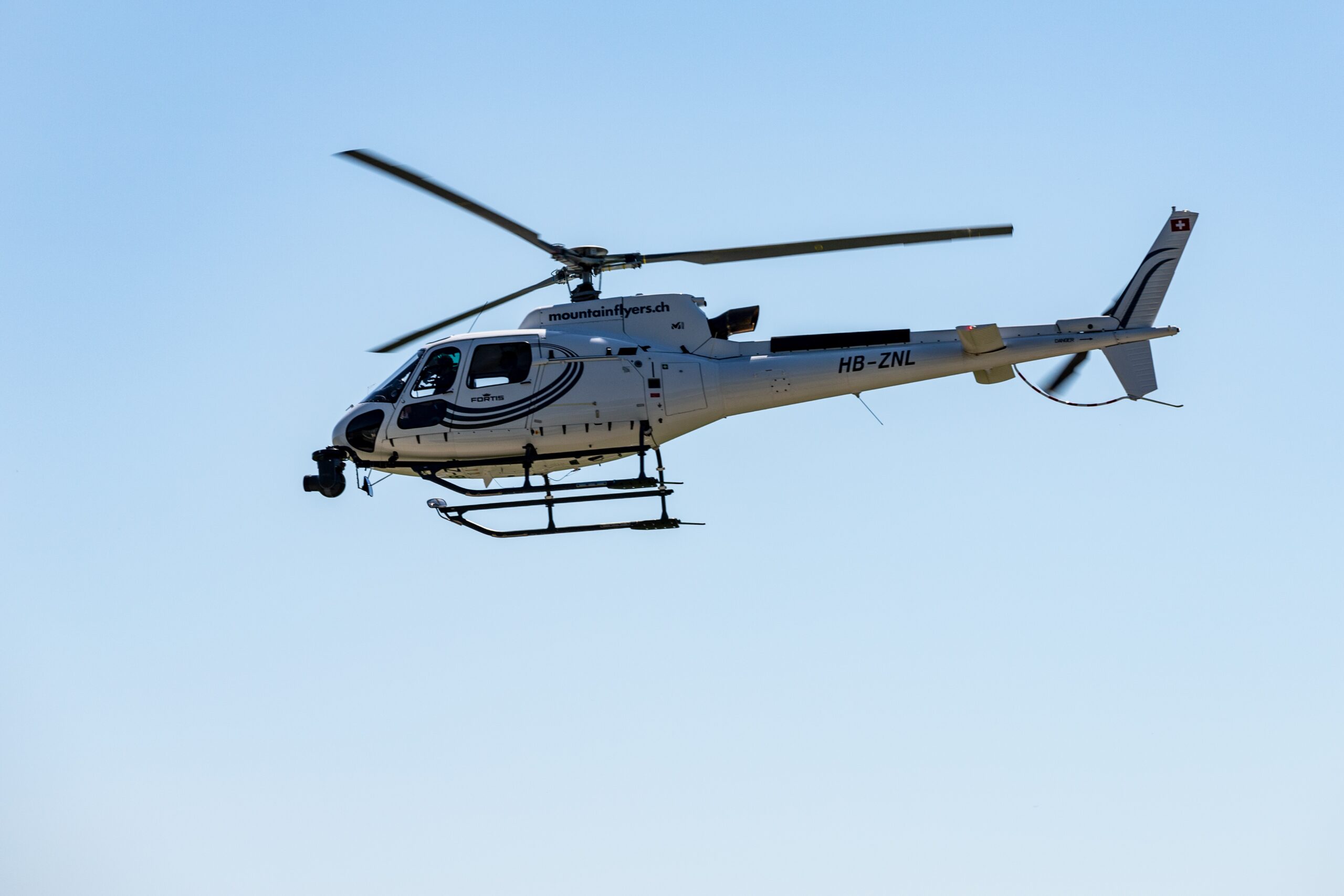
The Airbus H145 has established itself as the global benchmark for light-twin rotorcraft across the most demanding missions: emergency medical services, corporate VIP transport, law enforcement, search and rescue, and offshore operations.
With twin-engine safety margins, class-leading cabin volume and the advanced Helionix digital avionics suite, the H145 consistently outperforms rivals in payload, range and operational versatility. This guide covers its full specification and performance envelope, the five-blade H145 D3, how it compares with the Leonardo AW169, Bell 429 and Airbus H135, what a well-advised acquisition costs in 2024–2026, and the ownership economics buyers frequently underestimate.
What is the Airbus H145?
The H145 (formerly the EC145 and BK117) is a twin-engine, single-main-rotor light utility helicopter produced by Airbus Helicopters. Certificated by EASA and the FAA and operated in more than 50 countries, the type has accumulated well over 6 million flight hours, an exceptional reliability and safety record in virtually every environment.
Design lineage
The H145 traces its lineage to the MBB/Kawasaki BK117 programme of the 1970s, a joint German-Japanese development. The most significant recent evolution was the five-blade bearingless main rotor of 2020, the H145 D3, which added roughly 150 kg of useful load while reducing noise, vibration and maintenance complexity.
| Variant | Period | Key change | MTOW |
|---|---|---|---|
| EC145 | 2002 | Entry into service, four-blade rotor | 3,585 kg |
| EC145 C2 | 2012 | FADEC, Arriel 2E engines | 3,585 kg |
| H145 (D2) | 2015 | Helionix avionics, new rotor head | 3,585 kg |
| H145 D3 | 2020 – present | Five-blade bearingless rotor, +150 kg payload | 3,800 kg |
Market position. The H145 occupies the premium end of the light-twin category, competing directly with the Leonardo AW169 and Bell 429, with a higher price justified by a larger cabin, higher payload and broader mission certification.
Full technical specifications
These figures reflect the current production standard: the H145 D3 with the five-blade bearingless main rotor.
| Parameter | H145 D3 |
|---|---|
| Engines | 2× Safran Arriel 2E, FADEC-controlled |
| Power each (MCP / OEI 2.5 min) | 894 shp (667 kW) / 1,024 shp (764 kW) |
| Transmission rating | Two-engine 1,340 kW; OEI 760 kW |
| MTOW | 3,800 kg (8,378 lb) |
| Basic empty weight / useful load | ~1,790 kg / ~2,010 kg |
| Fuel capacity | 730 L (193 US gal); +268 L auxiliary option |
| Main rotor / Fenestron | 11.00 m / 1.00 m, 10-blade shrouded |
| Length (rotors turning) / height | 13.03 m / 3.96 m |
| Cabin L × W × H | 2.18 × 1.65 × 1.27 m (~4.62 m³) |
| Rear clamshell doors | Full-width, 1.39 × 1.16 m opening |
| Avionics | Helionix Step 4: 4-axis autopilot, HTAWS, EGPWS |
| Capacity / crew | Up to 9 passengers / 1 or 2 pilots (single-pilot IFR) |
Five-blade D3 rotor: what changed
The five-blade bearingless composite rotor head replaced the four-blade system without changing rotor diameter. It eliminates elastomeric bearing wear items, adds about 150 kg of useful load (an additional passenger plus luggage) and reduces external noise by roughly 3 dB(A).
Performance & operational envelope
| Parameter | H145 D3 |
|---|---|
| Never-exceed / max cruise | 155 kt (287 km/h) / 150 kt (278 km/h) |
| Economical cruise | 130–135 kt (241–250 km/h) |
| Ferry range | 560 nm (1,037 km); 680 nm (1,260 km) with aux fuel |
| Endurance | ~4.8 hr |
| Service ceiling | 20,000 ft (6,096 m) |
| HIGE / HOGE at MTOW, ISA | 12,400 ft / 9,350 ft |
| Rate of climb (sea level) | 7.5 m/s (1,476 ft/min) |
| External sling load | Up to 1,500 kg (3,307 lb) |
| OEI ceiling (Cat A, MTOW) | ~8,500 ft at ISA+15°C |
| Temperature range | −40°C to +50°C |
High and hot performance
The H145’s competitive advantage is its hot-and-high performance, underpinned by the Arriel 2E’s FADEC maintaining power across a wide temperature range. At ISA+20°C and 5,000 ft density altitude, representative of many Asian, Middle Eastern and African environments, the D3 retains the power margins for Category A performance and full-load operations.
Range in practice
With four to six occupants, operators typically plan 3.5–4 hours block time per fuel stop, a practical mission radius of about 200–240 nm at economical cruise. That is comfortably sufficient for most intra-regional operations across Southeast Asia, the Gulf and Europe.
Key features & technology
Helionix digital avionics
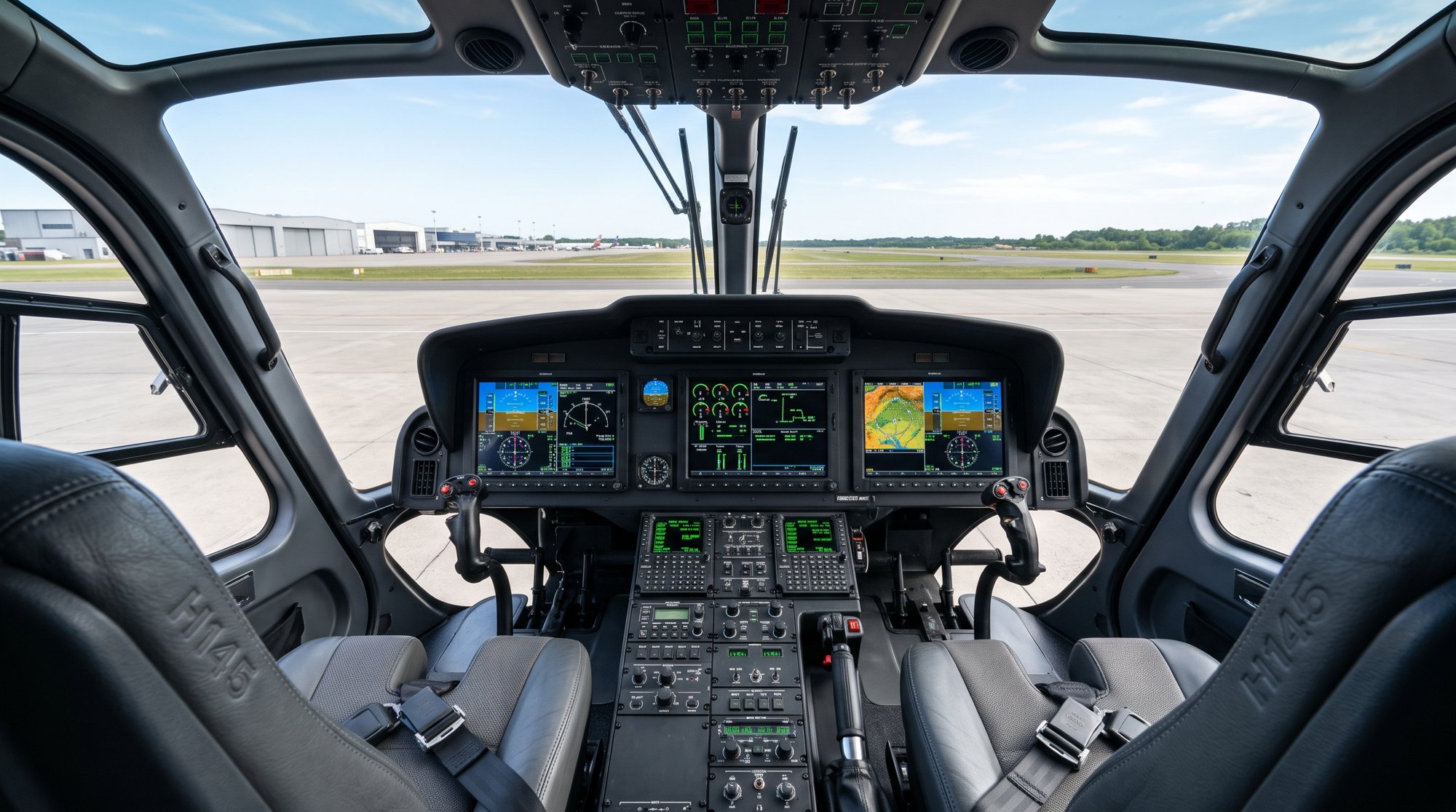
Helionix integrates the primary flight display, navigation, engine monitoring and a four-axis autopilot on a common digital backbone. Step 4 adds synthetic vision, Cat I approach capability and EGPWS. It supports single-pilot IFR with automatic hover hold and SAR patterns, making the H145 one of few light-twins certificated for single-pilot IFR with full automation.
Fenestron anti-torque system
The shrouded 10-blade tail rotor offers substantially lower noise, safer operation around ground crews, reduced foreign object damage and consistent authority across the speed range, a significant benefit for urban, HEMS and confined-area work.
Cabin architecture
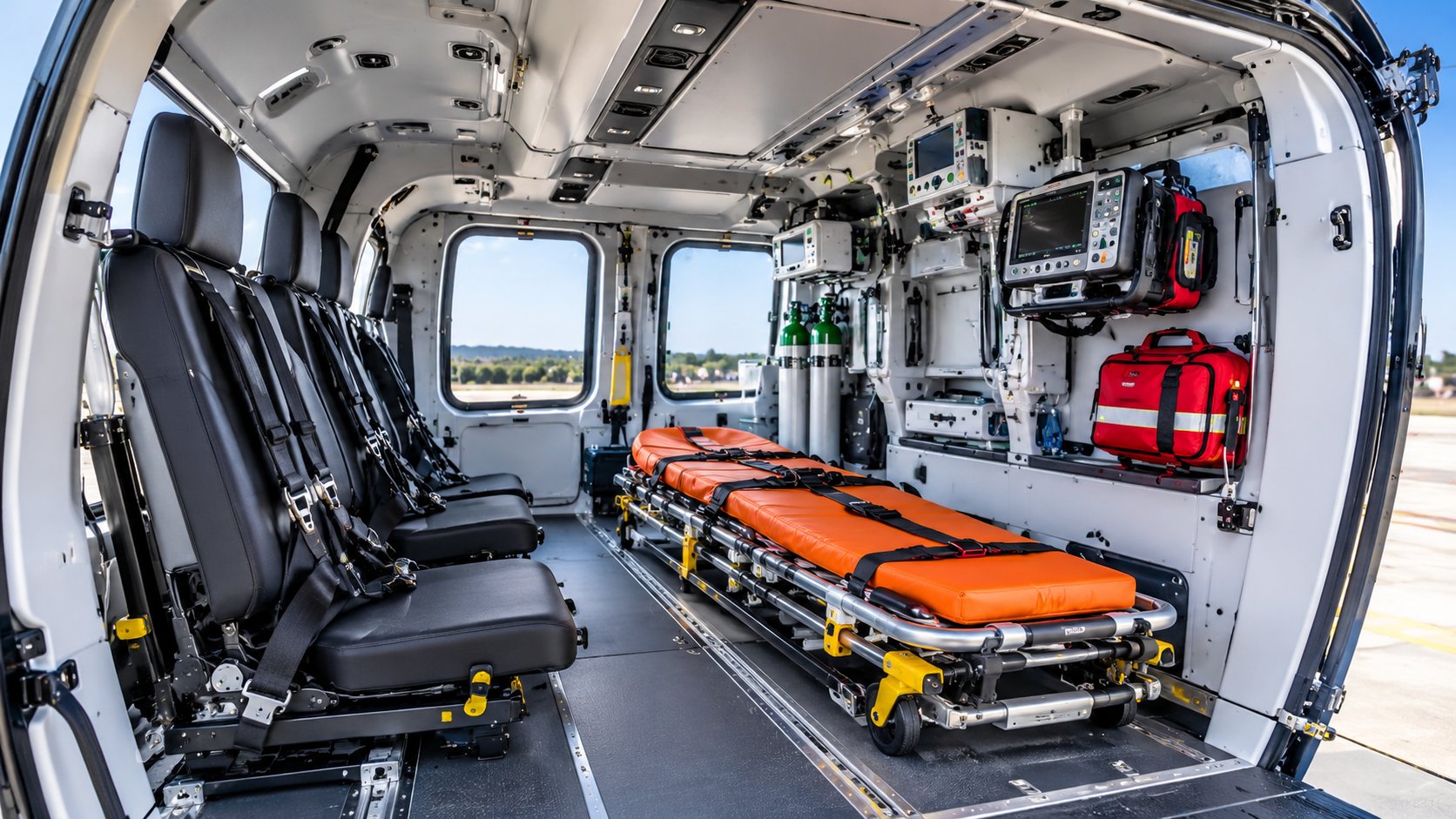
A large flat-floor cabin, full-size sliding doors on both sides and rear clamshell doors across the full fuselage width make the H145 the preferred platform for stretcher-based HEMS. The 1.65 m width and 1.27 m height meaningfully exceed competing platforms at this weight class.
Twin-engine safety architecture
Under EASA CS-27 multi-engine certification with Category A performance, each Arriel 2E runs independently with its own FADEC and fuel system, and the transmission sustains controlled flight at the OEI rating, a fundamental advantage offshore, over mountains and in dense urban areas.
Operational roles & use cases
Emergency Medical Services (HEMS)
The dominant platform in European HEMS, with ADAC Luftrettung, REGA Switzerland and DRF Luftrettung running fleets of 50+ aircraft. Longitudinal stretcher loading and room for a paramedic, physician and ICU-grade equipment set it apart.
VIP and corporate transport
Configured for four to six passengers with leather seating, individual lighting, USB/12V power, cabin management and optional Starlink/VSAT, the H145 VIP is increasingly the preferred solution for family offices, resort groups and corporations across Southeast Asia.
Law enforcement and public safety
Flown by police and security forces across Europe, the Americas and the Middle East with FLIR turrets, searchlights, PA systems and observer stations. The Fenestron reduces acoustic signature, and an NVG-compatible cockpit is a standard option.
Offshore, energy and parapublic
In offshore wind and oil and gas, twin-engine architecture is a regulatory requirement, and Cat A performance at full load suits the Gulf of Mexico, North Sea and Asian fields. The military H145M serves Germany, Luxembourg, Hungary, Thailand and others; the civil H145 also flies border patrol, firefighting and coast guard SAR.
H145 vs competitors
The H145 D3 sits at the premium end of the light-twin market. Its primary competitors are the AW169, Bell 429 and Airbus H135.
| Parameter | H145 D3 | AW169 | Bell 429 | H135 |
|---|---|---|---|---|
| MTOW | 3,800 kg | 4,800 kg | 3,175 kg | 2,950 kg |
| Max cruise | 150 kt | 168 kt | 150 kt | 145 kt |
| Ferry range | 560 nm | 534 nm | 400 nm | 389 nm |
| Cabin volume | ~4.6 m³ | ~6.2 m³ | ~3.5 m³ | ~3.1 m³ |
| Max pax | 9 | 10 | 7 | 7 |
| Tail rotor | Fenestron | Exposed | Exposed | Fenestron |
| New price (approx.) | USD 14–16M | USD 14–16M | USD 9–11M | USD 8–10M |
| HEMS suitability | Excellent | Good | Moderate | Good |
| Single-pilot IFR | Yes | Yes | Yes | Yes |
Advisory note. The AW169 offers more cabin volume and slightly higher speed, favouring passenger count or long-range VIP. The Bell 429 is priced more accessibly but carries a meaningful range and payload penalty. For HEMS, law enforcement and multi-role deployments, the H145 D3 consistently emerges as the most capable light-twin.
Acquisition guide: new vs pre-owned
New aircraft
A new H145 D3 in standard utility configuration lists at roughly USD 13.5–15 million (2024–2025 pricing). VIP examples with full interior design and satellite communications reach USD 15–17 million, and full HEMS fit-outs with hoist, medical equipment, searchlight and FLIR can exceed USD 18 million. Lead times run to about 24–36 months from order.
Pre-owned market
Pre-owned D2s trade from approximately USD 5–9 million for well-maintained, low-hours examples; pre-owned D3s typically from USD 9–14 million depending on hours, configuration and modification status. A pre-owned acquisition can complete in as little as 60–90 days.
Financing and structuring
| Route | Typical terms |
|---|---|
| Outright purchase | Common for family offices, governments and corporates; title held directly or via an aircraft-holding SPV |
| Operating lease | Milestone Aviation, AerCap and regional lessors; USD 55,000–70,000/month, 5–10 years (new D3) |
| Finance lease / hire purchase | Typical LTV 70–80%, 10–15 year terms |
| Export credit (ECA) | For government and public-sector buyers of new aircraft, e.g. KfW IPEX |
Timeline. New: 30–42 months from engagement to delivery. Straightforward pre-owned: 60–90 days. Complex examples needing modifications, re-registration or import acceptance: 4–6 months. An experienced aircraft advisor significantly reduces execution risk.
Planning an H145 acquisition?
SEACJETS guides buyers from specification through delivery. Book a confidential, no-obligation consultation.
Operating costs
These figures represent a mid-utilisation commercial operator (about 600 flight hours a year) in a developed-market jurisdiction.
| Cost category | Annual (approx.) | Per flight hour |
|---|---|---|
| Fuel (Jet A-1 ~USD 0.75/L) | USD 275–310k | USD 460–520 |
| Scheduled maintenance | USD 400–550k | USD 665–915 |
| Engine PBH (HCare Infinite) | USD 180–240k | USD 300–400 |
| Component / rotor head reserves | USD 80–110k | USD 130–185 |
| Crew (2 pilots, burdened) | USD 250–380k | USD 415–635 |
| Insurance (hull + liability) | USD 80–140k | USD 133–230 |
| Hangar and base | USD 40–90k | USD 65–150 |
| Navigation, handling, overflights | USD 20–50k | USD 35–85 |
| Total direct operating cost | USD 1.3–1.9M | USD 2,200–3,100 |
For VIP or charter operators, USD 2,400–2,800 per flight hour is a commonly cited benchmark for a well-managed H145 flying 500–700 hours annually. Operators on Safran’s HCare Infinite and Airbus’s HCare Smart programmes benefit from more predictable costs and stronger resale, typically 55–70% of original value at ten years for well-maintained examples.
Planning an H145 acquisition?
SEACJETS guides buyers from specification through delivery. Book a confidential, no-obligation consultation.
Frequently asked questions
What is the Airbus H145 used for?
Five mission categories: HEMS, VIP and corporate transport, law enforcement and public safety, offshore energy, and military/parapublic utility. HEMS is the dominant global role, with major European operators running fleets of 20–80+ aircraft.
What is the price of a new H145?
A new D3 in standard utility configuration lists at approximately USD 13.5–15 million (2024–2025). VIP examples range USD 15–17 million; full HEMS fit-outs can exceed USD 18 million. Pre-owned D2s trade from about USD 5–9 million, D3s from USD 9–14 million.
What is the range?
Ferry range is about 560 nm (1,037 km) on standard fuel, extending to 680 nm (1,260 km) with auxiliary fuel. With four to six passengers, operators plan a radius of 200–240 nm between fuel stops.
How does the D3 differ from the D2?
The D3, introduced in 2020, has a five-blade bearingless composite main rotor: about 150 kg more useful load, about 3 dB(A) lower external noise, no elastomeric bearings, lower vibration, and Helionix Step 4 as production baseline.
How fast does it fly?
Vne is 155 kt (287 km/h) and maximum cruise 150 kt (278 km/h); economical cruise is 130–135 kt. That is comparable to the Bell 429, slower than the AW169 (168 kt) and faster than the H135 (145 kt).
Is it good for VIP transport?
Yes. The cabin seats four to six in executive comfort with full leather, individual climate zones, cabin management and optional Starlink/VSAT. Its range, speed and twin-engine reliability suit inter-city, resort-to-airport and island transfers across Southeast Asia, the Middle East and Europe.
Can it fly on one engine?
Yes. It is certificated under EASA CS-27 multi-engine standards with Category A OEI performance. Each Arriel 2E has a 2.5-minute OEI rating of 1,024 shp, allowing a safe continued or rejected take-off after an engine failure.
How many passengers does it carry?
Up to nine plus one or two crew in utility configuration; four to six in VIP; a patient plus one or two medical crew in HEMS.
How long does acquisition take?
New: approximately 24–36 months from signed contract to delivery. Pre-owned: as little as 60–90 days for a straightforward transaction, or 4–6 months for aircraft needing modifications, re-registration or import acceptance.